


- By nukleusAdmin
- February 5, 2026
- 0 Comment
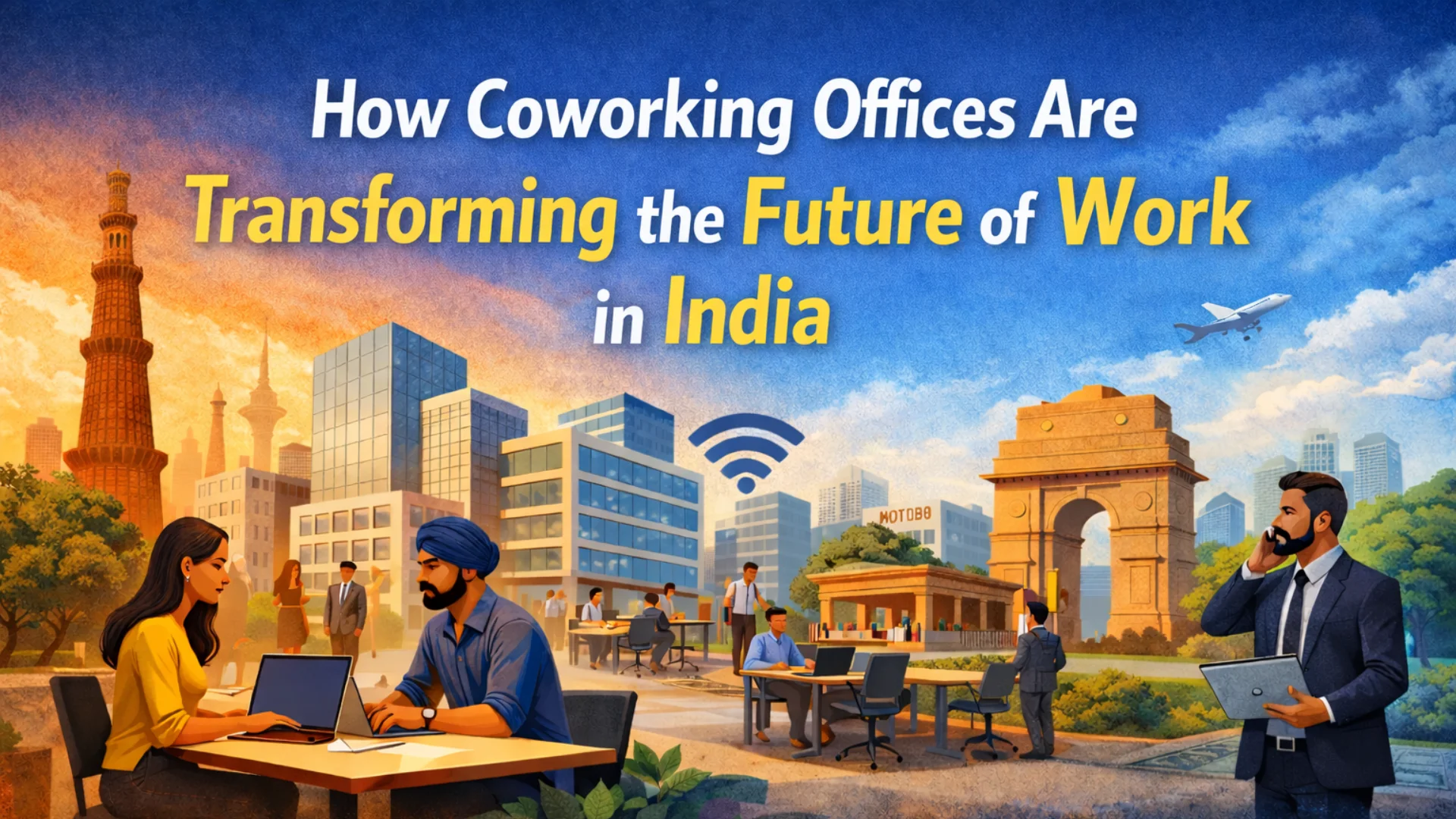
How Coworking Offices Are Transforming the Future of Work in India
The way the corporate world works in India has changed. The old 9-to-5 model and traditional one-size-fits-all offices were living on borrowed time.
We can’t deny the fact that for decades, office culture meant long leases, fixed seating, expensive fit-outs, and the belief that productivity only happened inside a permanent headquarters. But, since the pandemic hit, businesses across India have shifted toward flexible work models and distributed teams.
Startups are getting cost-conscious, enterprises are expanding into new cities faster than ever, and they don’t want to sink capital into concrete.
According to the 2025 India Office Occupier Survey, about 73% of companies in India are considering hybrid working arrangements as the way forward, and nearly 3 out of 4 employees in India prefer flexible work options.
Suddenly, the traditional office model began to look rigid, while demand for coworking spaces surged, not as a passing trend, but as a structural shift in how businesses think about space, cost, collaboration, and growth.
From startups in Koramangala to consulting firms in Connaught Place, from IT teams in Noida to enterprise hubs in Gurgaon, flexible workspaces are quietly becoming the backbone of India’s new work economy.
This is about how businesses are redesigning the future of work.
What is a Coworking Office?
At its simplest, you can think of a coworking office as an infrastructure-as-a-service. It is a professionally managed workspace where numerous businesses operate within the same facility while maintaining their independence.
On paper, it sounds simple. In practice, it’s transformative.
But that definition barely scratches the surface. In reality, coworking offices combine infrastructure, flexibility, and community under one model. Businesses don’t lease raw real estate; they subscribe to fully functional work environments.
The core format of coworking spaces is shared office spaces where companies share common amenities such as:
- Reception and visitor management
- Meeting rooms and conference areas
- High-speed internet and IT infrastructure
- Cafeteria and breakout zones
- Security and access control
It flips the traditional leasing model on its head. Instead of investing heavily in office setup, companies access ready-to-use infrastructure on flexible terms. Brick-and-mortar commitments come with baggage, so the cost advantage is obvious, but the operational simplicity is even more powerful.
For growing teams and enterprises, managed office space provides customized, private environments within a coworking ecosystem. These spaces can be branded, redesigned, and scaled according to business needs, without the company handling vendor coordination, maintenance, or long-term lease commitments.
Evolution of Flexible Office Spaces in Metro Cities
India’s metro cities are not just adopting coworking; they are swiftly driving its transformation. These cities are ground zero for workplace reinvention.
Delhi: Where Legacy Enterprises Set the Tone
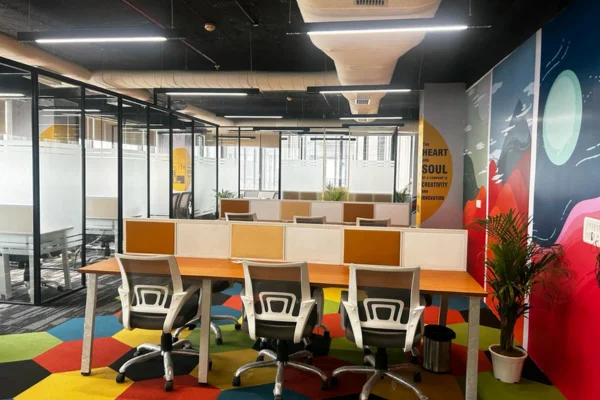
The demand for Coworking office in Delhi has surged across prime locations like Connaught Place, Saket, and Nehru Place. Delhi businesses traditionally preferred established commercial complexes. However, rising rental costs and the need for hybrid-friendly environments have accelerated the shift toward flexible office solutions.
Law firms, consultants, startups, and even government-affiliated organizations are choosing coworking for:
- Prime business addresses
- Lower capital commitment
- Immediate operational readiness
Delhi’s coworking ecosystem blends credibility with agility.
Noida: The IT and Technology Corridor
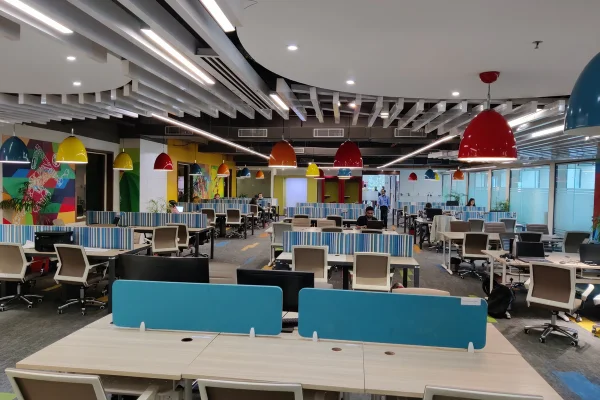
The rise of Coworking office in Noida mirrors the city’s transformation into an IT and startup hub. With strong infrastructure, metro connectivity, and competitive commercial pricing, Noida has become attractive for:
- Technology companies
- SaaS startups
- Mid-sized enterprises
- BPO and consulting firms
Sectors 62, 63, and 125 are seeing increasing absorption of flexible office spaces, as businesses prioritize cost efficiency without compromising on professional setup.
Gurgaon: Where Global Business Sets Up Shop
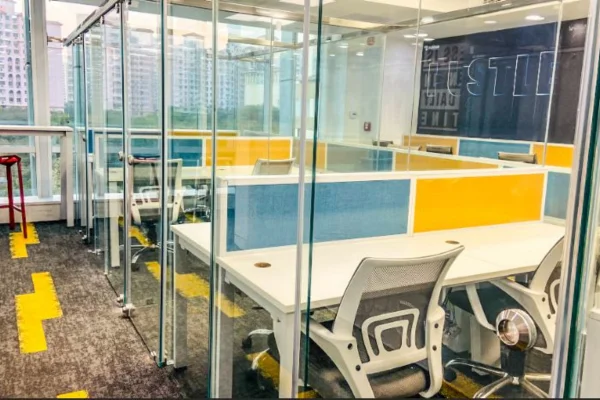
Few cities represent India’s corporate ambition like Gurgaon. The growth of the Coworking office in Gurgaon across Cyber City and Golf Course Road reflects enterprise-driven demand.
Multinational companies use coworking spaces for:
- Satellite offices
- Expansion teams
- Innovation divisions
- Hybrid workforce hubs
Gurgaon’s coworking market is increasingly enterprise-focused. They are offering large private suites and managed office configurations designed for teams of 100+ employees.
Bengaluru: The Technology Engine of India

The popularity of Coworking office in Bengaluru aligns perfectly with the city’s reputation as India’s startup capital.
Areas like Koramangala, Whitefield, and Outer Ring Road have witnessed steady demand from:
- Venture-backed startups
- Product companies
- Global capability centers
- Remote-first teams
Bengaluru coworking spaces are known for collaborative layouts, tech-enabled infrastructure, and scalability that support hyper-growth companies.
Why Businesses Prefer Coworking Offices Today
In today’s market, standing still is falling behind. You have to evolve with time. This shift toward coworking is a strategic move as businesses want to stay light on their feet. They provide a room to grow without growing pains by offering several benefits, including:
1. Flexibility in Uncertain Times
Traditional commercial leases typically lock businesses into multi-year agreements. In a volatile economic environment, that rigidity increases risk.
Coworking contracts allow companies to:
- Scale up quickly
- Downsize without legal complexity
- Enter new markets with minimal risk
2. Reduced Capital Expenditure
- Interior design and fit-outs
- Furniture procurement
- IT infrastructure
- Security systems
Coworking spaces remove the capital outlay and turn it into a fixed operational cost. This makes a huge difference to cash flow for startups and SMEs.
3. Faster Time to Market
4. Built-In Professional Infrastructure
- Enterprise-grade internet
- Conference rooms
- Visitor management systems
- 24/7 access
- Backup power solutions
Companies gain credibility instantly without building infrastructure from scratch.
Why sink capital into interiors and infrastructure when cash flow is king? Flexible workspaces convert heavy upfront investment into predictable monthly expenses. It is a much-needed shift that aligns perfectly with modern financial strategy.
Industries Driving Coworking Growth
Coworking adoption in India is not just for freelancers with laptops and cold brew. The growth is industry-led, and the industries moving first are the ones that value speed, efficiency, and strategic control. Let’s talk about which industries are really leading the charge.
1. Startups: Built for Speed, Not Long Leases
Startups live in fast-forward mode. Funding rounds close overnight. Teams double in months. Product pivots happen before the paint on the office wall even dries. Data says that over 90% startups fail just in the first 5 years.
For a startup, locking into a 5-year lease feels like putting on handcuffs before the race even begins. For a business, agility is oxygen, cash flow is king, so every single penny needs to work harder.
Instead of sinking capital into interiors and infrastructure, startups would rather invest in product development, hiring engineers, or acquiring customers.
India’s startup ecosystem, particularly in cities like Bengaluru and Delhi NCR, has expanded rapidly over the last decade. With thousands of new ventures emerging across fintech, SaaS, D2C, and healthtech, workspace needs fluctuate constantly.
Coworking aligns with the rhythm of startups. Scale up without friction. Scale down without penalty. Move fast without being weighed down by fixed overhead.
2. IT and Technology Companies: Scaling by Project, Not by Postcode
The IT sector operates differently. Teams expand and contract based on project cycles. A new client comes in, you hire 30 engineers, and when that delivery phase ends, team structures shift.
Traditional offices struggle with this elasticity. You either overpay for unused space or scramble when you need more.
Coworking spaces solve that.
India’s technology and IT-enabled services sector contributes significantly to urban office demand, especially in cities like Noida, Bengaluru, and Gurgaon. But today’s tech companies are no longer thinking in terms of one monolithic headquarters. They’re thinking distributed, hybrid, and satellite hubs. The rulebook has been rewritten. IT companies aren’t just leasing space, they’re optimizing it.
3. Consulting Firms: Premium Presence, Lean Structure
The consulting world is perception-driven. One must address issues. Conference rooms matter. First impressions matter. However, here’s the rub: most consulting companies have lean core teams. They do not require large floor plates. They require credibility without the overhead.
This is where coworking spaces come into play and hit the sweet spot.
Having a prime business location in Delhi, Gurgaon, or Bangalore is a sign of strength. Having fully functional boardrooms is a step up in client meetings. Having reception services is a boost to professionalism. However, the economics are still tight.
Why get stuck in large offices when the business model itself is asset-light? Consulting companies are experts at being efficient. Coworking spaces are a perfect fit for this mentality: all the credibility, none of the chaos.
4. Large Enterprises: Strategic, Not Experimental
Here’s where the story changes. Coworking is no longer “just for startups.” Enterprises are no longer testing flexible workspaces. They’re intentionally deploying them.
In the top Indian metro cities, enterprise occupancy now contributes substantially to coworking space utilization. Large corporations are incorporating flexible workspaces into their real estate strategies as a deliberate plan. Why?
Because commercial tenancy agreements typically vary from three to nine years. In uncertain markets, such inflexibility can be perilous. Enterprises crave flexibility.
They employ coworking as a market-entry strategy before locking in long-term commitments. To set up innovation labs that operate independently from headquarters. To serve hybrid workers near residential hubs. To mitigate long-term real estate risk.
This is not about penny-pinching. This is about risk management. The corporate real estate sector is undergoing a paradigm shift from an “ownership-centric” mindset to an “access-centric” approach. From “How much space do we own?” to “How efficiently can we use space?” This paradigm shift is enormous.
Role of Location in Choosing a Coworking Office
A. Strategic Connectivity
Time is money, and there’s no place where this saying is truer than in the daily commute. Research in major cities in India has found that workers in these cities spend an average of 60-90 minutes a day commuting to and from work. Cut that by 20 minutes, and you’re not only saving time, you’re also saving your sanity.
Locations that are close to metro stations, highways, and airports eliminate the hassles of commuting. When a coworking space has good connectivity, there are fewer messages saying “stuck in traffic” and more meetings that are on time. For teams that work with clients, being close to airports and business districts can make a logistical nightmare a same-day handshake.
Good connectivity is not a nicety. It’s operational efficiency masquerading as one.
B. Business Ecosystem Advantage
Business clusters are not an accident; they exist for a reason. When businesses are side by side in business districts, opportunity is more likely to come knocking.
The best office corridors in India have witnessed focused commercial development because of the same reason- the value multiplies. Suppliers are around. Service providers are nearby. Talent is already moving in the same ecosystem.
Growth may not always happen because of a pitch deck. It may happen because of proximity. Networking, referrals, and even hiring may happen because you are in the right room or at least in the right building.
As they say, success leaves clues. And it always sets up shop in business districts that are well-connected.
C. Networking Density
Coworking spaces take this to the next level. Rather than one business per floor, you have dozens of businesses operating out of the same space. This is the professional density that gives you a competitive edge.
When different industries are stacked on top of each other, such as tech, marketing, and consulting, collaboration becomes easy. It’s not something that has to be encouraged. It just happens. Innovation doesn’t happen in a vacuum. It happens when ideas meet. It’s not just about being in a prestigious location; it’s about momentum.
Conclusion
The workplace has shifted. The way we work today barely resembles what it looked like five years ago. Offices aren’t just places we go anymore, they’re choices we make.
Companies today are rethinking everything, from the length of time they lease and where they locate to how their teams work together. Flexibility is no longer a “nice-to-have.” It’s a powerful tool for growth, cost management, talent retention, and market responsiveness.
From Delhi to Gurgaon, Noida, and Bengaluru, companies are no longer just selecting a coworking space because it’s the latest thing. They’re selecting it because it’s the right decision. Flexibility. Smarter resource allocation. Improved connectivity. Enhanced ecosystems.
If you’re considering your next office move, consider more than just space. Consider the strategy. Consider connectivity. Consider how your workspace can drive growth rather than just house it. The best office doesn’t just house your business. It drives it.
Ready to discover more effective workspace options in your city? Schedule a Consultation Now!
FAQs
A coworking office space is a shared, flexible workspace where individuals and companies can use fully managed offices, desks, and meeting rooms without long-term lease commitments.
Coworking offices facilitate hybrid work patterns with flexible seating, multiple locations, and on-demand access for distributed and remote teams.
Yes, coworking offices are increasingly adopted by large corporations for satellite offices, innovation centers, and flexible real estate strategies.
Shared office spaces usually include high-speed internet, meeting rooms, reception services, private cabins, utilities, housekeeping, and collaboration areas.
Coworking offices are increasing in metro cities because of increasing commercial real estate costs, demands for flexible workspaces, the growth of startups, and better connectivity in cities.
Coworking enhances collaboration by bringing together various industries in the same shared workspace, fostering networking, idea sharing, and organic partnerships.
Yes, coworking is suited for remote teams because it offers professional infrastructure, flexible access, and centralized spaces for periodic team collaboration.